
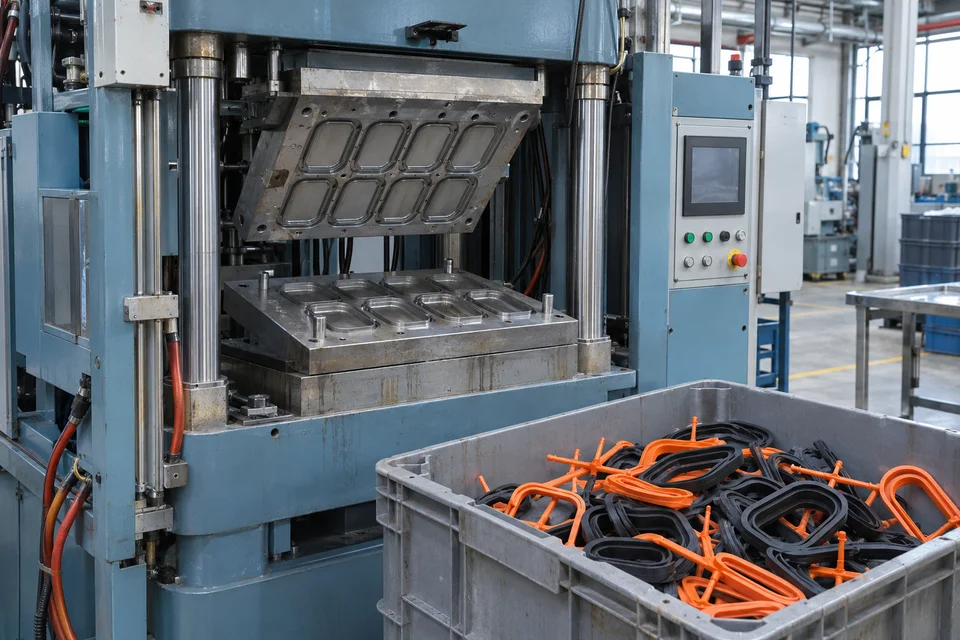
Identify where the scrap comes from
Describe whether the material comes from molding, trimming, cutting, or rejected production. Include the original compound or grade if known. If several processes feed the same container, explain that mixture instead of presenting it as a single consistent material.
A cured part made from an LSR process should be described as cured rubber scrap. Unused liquid components or uncured leftovers need their own inventory description.
Show the condition of the material
Include an overall photograph and close-ups that show attached components, coatings, reinforcement, or other materials. Identify known metal, plastic, adhesive, oil, or other contamination. Appearance is useful context, but it does not replace the product information.
If different grades or streams are already separated, record that organization in the inquiry. Ask for guidance before combining them or changing how they are packaged.
Explain your generation pattern
A one-time clearance and an ongoing scrap stream require different planning. State the amount currently on hand and, where applicable, the typical weekly or monthly generation. Use measured weights when available, or make clear that the figure is an estimate.
Include the collection city, region, country, and current packaging. Photographs of the stored material can help explain the number of containers and the way the inventory is organized.
Build a repeatable material profile
For recurring production scrap, keep the description tied to the actual stream. If the compound, process, or contamination changes, update the profile rather than assuming an earlier description still applies.
ECO USA can review the information and discuss a suitable recycling arrangement. Confirm material acceptance and logistics before arranging a shipment.