
Identify the product
Record the manufacturer, product name, grade, and batch or lot information where available. Use the original label description. Distinguish LSR, PDMS oil, HTV or gum, silicone transformer fluid, and cured industrial rubber rather than putting every stream under one “silicone waste” heading.
Describe why it is available
Is the inventory expired, surplus, wide-spec, off-spec, used, or a recurring production scrap stream? If a specification difference is known, include it. For dated stock, provide the labeled date rather than making assumptions about its current properties.
Explain the current condition
Describe sealed or opened containers, mixed components, cured residues, attachments, and known contamination. For LSR, identify each component and its quantity. For used fluid, describe its application and any known additions or mixtures.
State quantity and frequency
Include the amount currently available, with units. Identify estimates as estimates. If you generate material regularly, state the typical frequency and amount separately from the inventory on hand. Keep weights and volumes distinct.
Show material and packaging
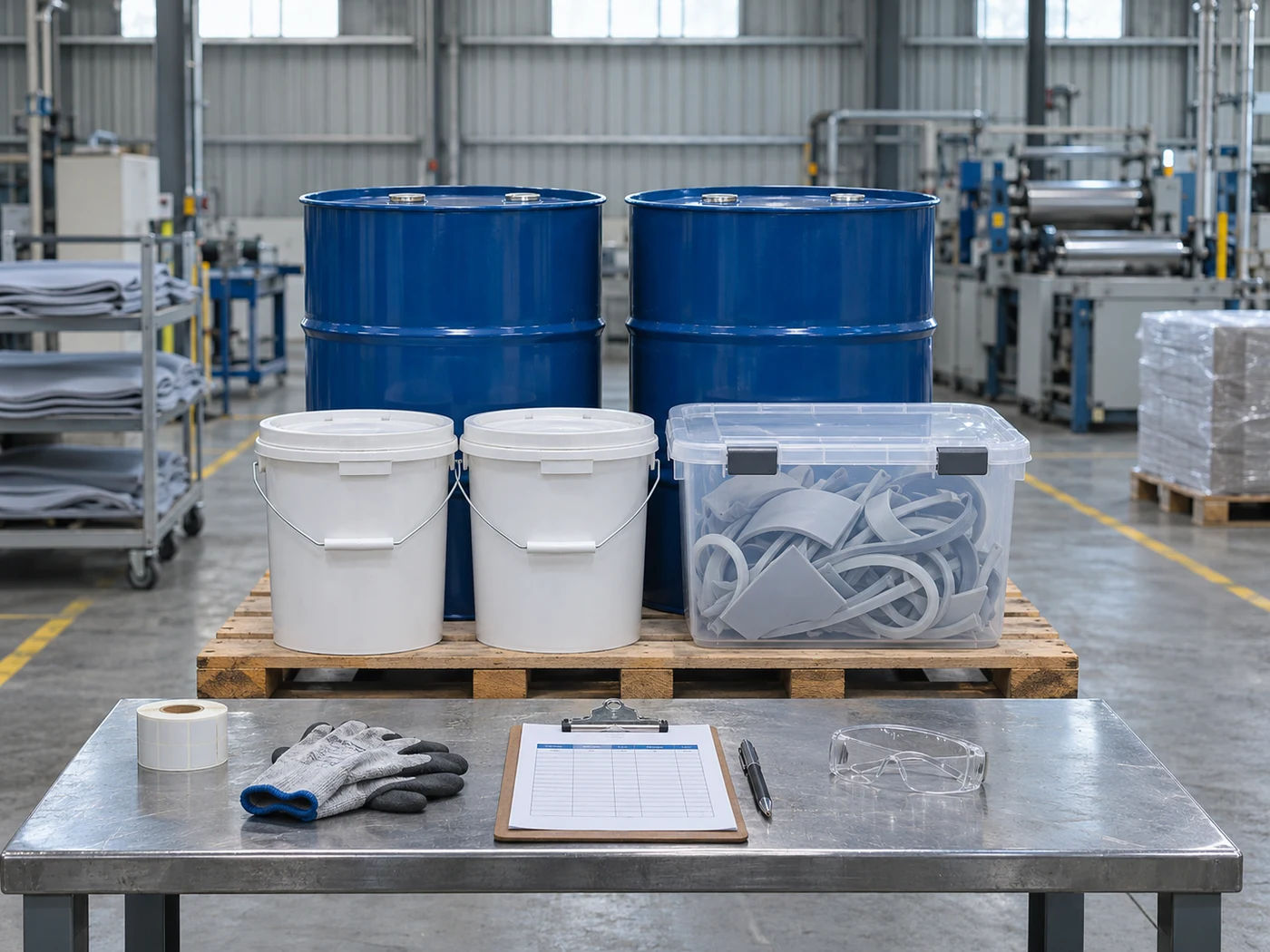
Provide an overall photograph, a close-up of the material, legible product labels, and a view of existing containers. Share relevant technical or safety data sheets and existing quality or service records when available. Avoid removing labels or combining identifiable batches before review.
Provide the location
Include the city, state or region, and country. Describe the current storage or equipment situation and relevant collection access information. Any change in packaging, handling, or transport arrangements should follow the material-specific discussion.
A concise inquiry example
“We have [material and grade], available because [reason]. The condition is [sealed, opened, used, mixed, or cured]. Approximately [quantity and units] is currently available at [location], with [recurring amount, if any]. It is stored in [packaging]. Known contamination or attachments: [details or unknown]. Labels, photos, and available documents are attached.”
You do not need every answer to start. An accurate description of what is known is more useful than a complete form filled with guesses.